Navigating Cerebral Palsy: A Guide for Parents – Children's Orthopaedic and Scoliosis Surgery Associates, LLP

Navigating Cerebral Palsy: A Guide for Parents

March 31, 2026:

Cerebral Palsy is a disorder that affects a child’s ability to control their muscles. It affects approximately 2 out of every 1,000 children. It can be caused by brain development issues or injury, usually before birth or during early infancy. Every child’s experience is different. Physical disabilities can be mild, moderate, or severe. Some children can walk independently, while others need assistive devices, like crutches, walkers, or wheelchairs. There are no specific blood tests or imaging studies that can make the diagnosis of cerebral palsy. Currently there is no cure for CP.
Early Signs to Watch For:

Common signs include:

  • Missing Milestones: Taking longer to roll over, sit up, crawl, or walk.
  • Muscle Tone: Your child might feel floppy (low tone) or very stiff (high tone).
  • Movement Patterns: Walking on tiptoes or using one side of the body more than the other.

Understanding the Types of CP

Pediatric orthopedic specialists use specific classification tools to help decide treatment options.
1. Physiologic
  • Spastic: The most common type, where muscles feel stiff and tight.
  • Dyskinetic/Athetoid: Involuntary or wiggly movements that are hard to control.
  • Ataxic: Challenges with balance and shaky movements.
2. Geographic
  • Hemiplegia: Affects one side of the body (e.g., the right arm and leg).
  • Diplegia: Affects both legs; the arms are usually much stronger.
  • Quadriplegia: Affects all four limbs and the trunk.

3. The Level of Independence (GMFCS) is a scale from Level I to V to describe how a child moves.

  • Levels I–II: Can walk independently but may need braces or have trouble keeping up with peers.
  • Level III: Uses a walker or crutches for short distances.
  • Levels IV–V: Uses a wheelchair and may need extra support for sitting and trunk stability.
How Pediatric Orthopaedic Care Can Help
While there is no cure for CP there are options available to manage the physical effects and help improve your child’s quality of life.

Non-Surgical Support

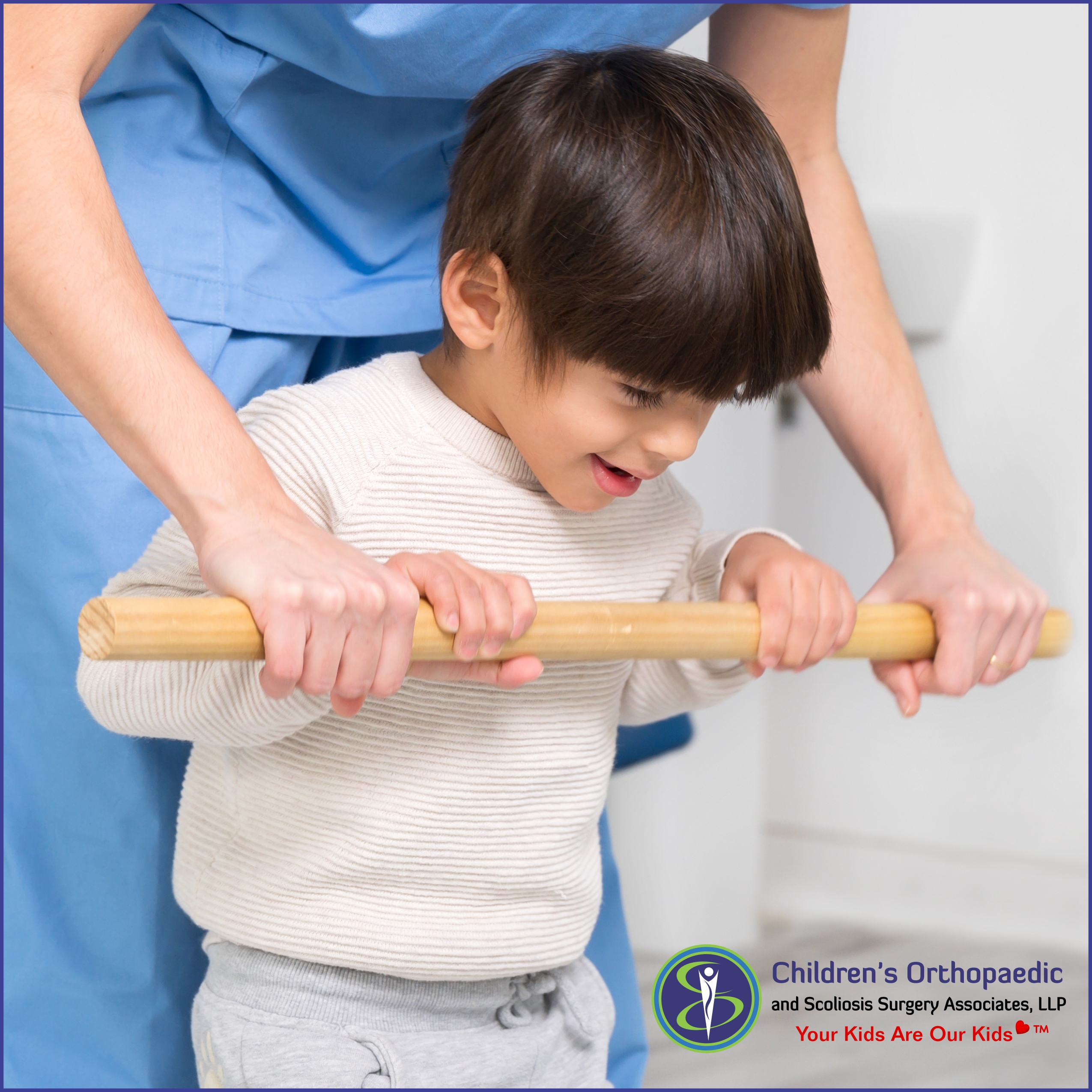
  • Physical Therapy: To help build strength and prevents muscles from becoming painfully tight.
  • Braces and Splints: To help align the joints, making it easier for your child to stand or walk.
  • Medications: Botox injections or oral medications that can help relax stiff muscles, allowing for better range of motion.
When is Surgery Necessary?

Our goal with surgery is to reduce pain and maximize independence.

  • Soft Tissue Surgery: Lengthen tendons to help a child put their heels flat on the floor.
  • Bony Procedures: Correct bone alignment or ensure the hips stay safely in their sockets.
  • SEMLS (Single-Event Multilevel Surgery) SEMLS is a comprehensive surgical approach that ranges from performing multiple smaller procedures to major reconstructions, all within a single session. This allows the patient to benefit from single anesthesia, one hospitalization, and one recovery period, with the goal of maximizing their ability to walk.

A critical part of the care team are physiatrists (Physical Medicine and Rehabilitation specialists) Physiatrists like James Lawrence Chinarian, MD and Paul Kornberg, MD are essential in this process; they oversee non-surgical intervention with the primary goal of optimizing function and avoiding surgery if possible.

Every child with CP has unique potential. By monitoring their growth and using tools like the GMFCS, we can ensure they will receive the correct treatment at the right time.

It is important to take your child to pediatric specialists who are experts in treating only kids. At Children’s Orthopaedic and Scoliosis Surgery Associates, LLP our board certified, fellowship trained, specialists provide the best child-friendly care using the latest cutting-edge technology that results in the safest and most accurate outcomes. Please call our office at (727) 898-2663 to schedule an appointment.

Medically reviewed by Daniel C. Bland, MD Board Certified Orthopaedic Surgeon.

Children’s Orthopaedic and Scoliosis Surgery Associates LLP provides information and articles as a service to our readers. No content on this site, regardless of date, should ever be used as a substitute for direct medical advice from your doctor or other qualified clinician. This blog provides general information and discussions about health and related subjects. The information and other content provided in this blog, or in any linked materials, are not intended and should not be construed as medical advice, nor is the information a substitute for professional medical expertise or treatment, If you have a medical concern, you should consult with your health care provider or seek other professional medical treatment. If you think you may have a medical emergency, call your doctor or emergency services immediately. The opinions and views expressed on this blog and website have no relation to those of any academic, hospital, health practice or other institution.

Translate »